
Former New Brunswick Premier Frank McKenna has a clear message for Atlantic Canada. The region must tear down interprovincial trade barriers and think beyond its borders to become an economic powerhouse.

Speaking at the CBRE Atlantic Market Outlook conference, McKenna outlined the steps needed to secure the economic future of the region. He pointed to trade barriers, energy infrastructure and changing relations with the United States as the primary issues demanding immediate action. You can read the original report from the Halifax Herald.
Building a Single Atlantic Economy
McKenna supports creating a single economy for Atlantic Canada. The four provinces have more to gain by working together than by competing. A recent Atlantic Economic Panel report backs this up, calling on Nova Scotia, New Brunswick, Newfoundland and Labrador and Prince Edward Island to unite.
The goal is to create one economic market for the 2.7 million residents of the region. This requires removing trade and labour mobility barriers between the provinces. McKenna notes that while provinces have made some progress, they have not gone far enough.
“All of the provinces will claim that it is not them, that they have the high ground, and that it is somebody else who has got barriers up,” McKenna said. “And in fairness, they have taken some of the barriers down. But they have not gone far enough.”
Removing these barriers exposes every province to more competition. While some jobs will shift, the collective industries will grow stronger. McKenna argues that spiking interprovincial trade barriers will create a massive increase in productivity and quickly eliminate national debt deficits.
Bringing Western Oil to Saint John
For residents of Saint John, McKenna highlighted a massive missed opportunity that requires immediate attention. He sees incredible economic potential in developing a transcontinental pipeline to move Western Canadian oil to Eastern Canada and international markets.
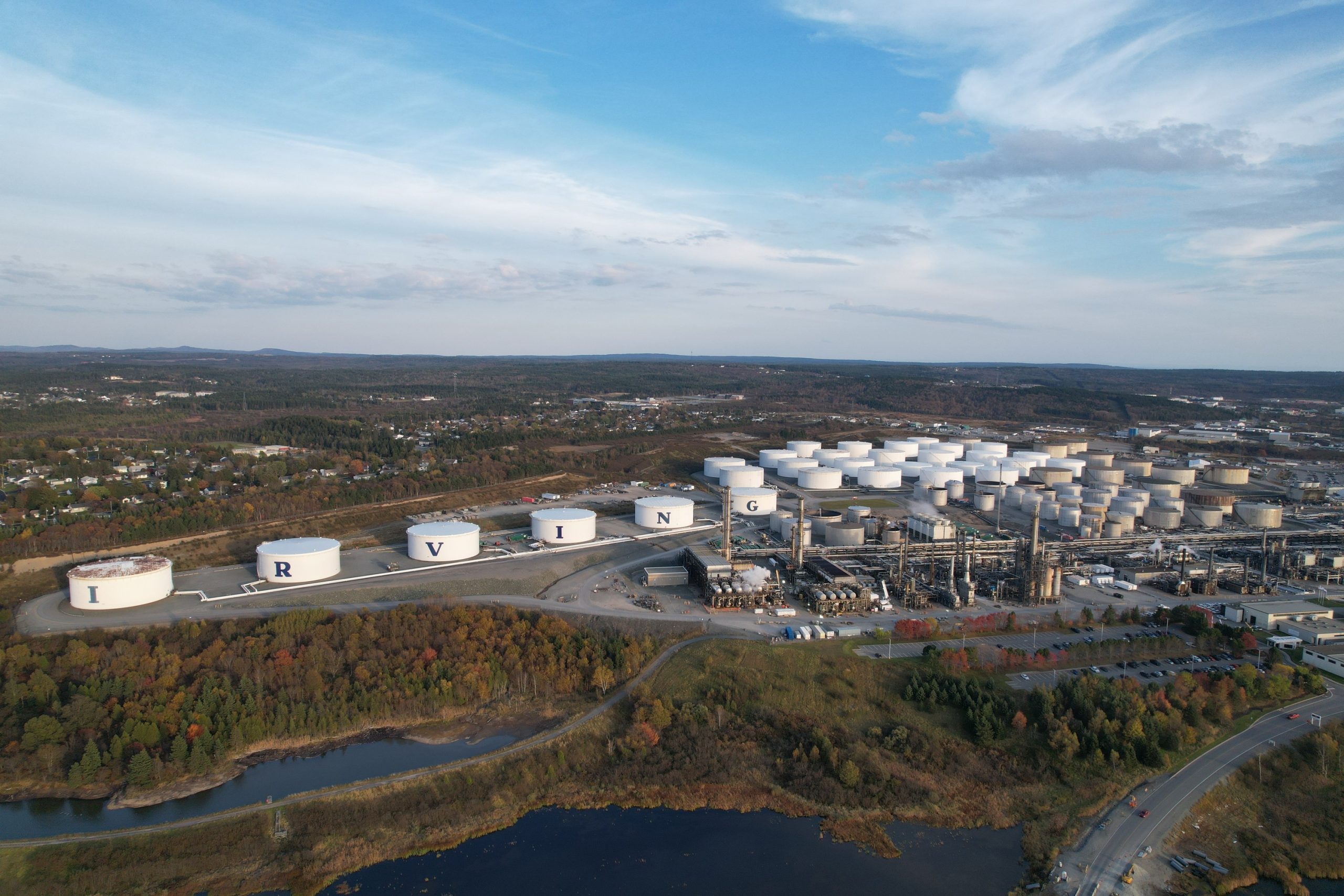
Failing to build this infrastructure cost the Canadian economy an estimated $100 billion over the past decade. McKenna questioned the logic of exporting oil from the West Coast while importing 500,000 barrels a day to supply Eastern Canadian markets.
He wants to see a national pipeline extended directly to Saint John and the Irving Oil refinery. This infrastructure will reduce Canadian dependence on the United States as an energy transportation route.
“Bringing that oil to the Irving refinery in Saint John would massively help us,” McKenna said.
Navigating the Political Climate
The current political environment in Ottawa is favourable to major energy projects. McKenna noted that Prime Minister Mark Carney is prepared to put pressure on provinces to make meaningful changes. This includes using federal funding as leverage to force cooperation.
Uncertainty south of the border also presents an opportunity. McKenna suggested that pressure from US President Donald Trump has united Canadians across the political spectrum. This unity gives governments a strong mandate to make difficult decisions and pursue necessary reforms.
“Adversity sometimes is what you need in order to get to a higher level,” McKenna said. “Canadians are united from coast to coast, across the political spectrum, provinces and everything. We believe in our country, we believe in our sovereignty, and we are going to fight for it.”
Frequently Asked Questions
What is a single Atlantic economy?
A single Atlantic economy integrates the markets of New Brunswick, Nova Scotia, Prince Edward Island and Newfoundland and Labrador. This approach removes trade and labour mobility barriers to create one unified economic zone for 2.7 million residents.
Why does Frank McKenna want a pipeline to Saint John?
A transcontinental pipeline to Saint John will bring Western Canadian oil directly to the Irving Oil refinery. This reduces reliance on foreign oil imports, decreases dependence on US transportation routes and creates significant economic wealth for the region.
How do interprovincial trade barriers affect the economy?
Trade barriers between provinces restrict the movement of goods and labour. Removing these barriers increases competition, boosts productivity and helps eliminate debt deficits, which ultimately improves the quality of life for all Canadians.


0 Comments