
Boosting Saint John’s Economy: Understanding Canada’s Productivity Challenge and Local Opportunities
As Saint John, New Brunswick, navigates a dynamic economic landscape, understanding national trends is crucial for local business success. A recent address by Bank of Canada External Deputy Governor Nicolas Vincent sheds light on a critical issue affecting all of Canada, including our vibrant city: the nation’s persistent struggle with productivity. Delivered on November 19, 2025, Vincent’s speech, “Toward a virtuous circle for productivity,” emphasizes that Canada’s weak productivity over the past quarter-century continues to impact our economic resilience and standard of living. This national challenge has direct implications for Saint John businesses, influencing everything from wage growth to competitiveness in a rapidly changing world.
In the current economic climate, marked by ongoing inflation and evolving global trade dynamics, the call for improved productivity resonates deeply. While the Bank of Canada works to maintain low and stable inflation, local businesses in Saint John must also contend with seasonal shifts and the broader impact of interest rates on investment and consumer spending. Enhancing productivity is not just an economic theory; it’s a practical pathway to greater affordability, higher incomes, and stronger local businesses.
The Productivity Puzzle: Why It Matters for Saint John
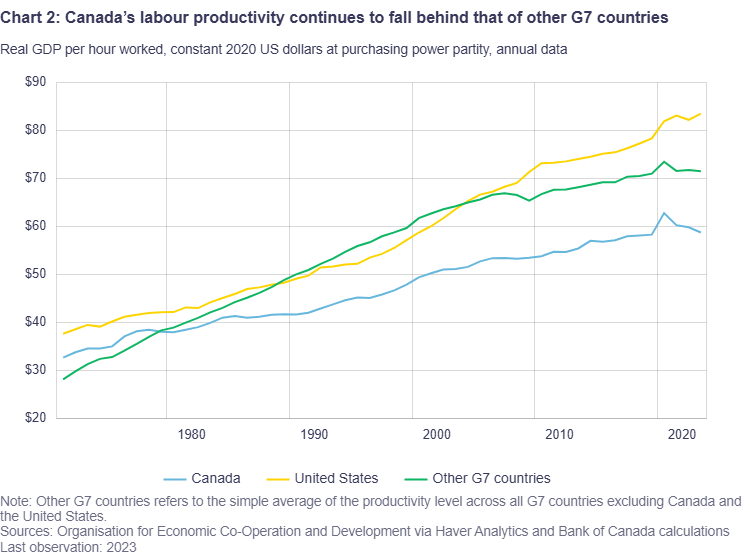
Productivity, in economic terms, measures how efficiently inputs like labour and capital are used to produce goods or services. It’s not about working harder, but smarter—producing more with existing resources. Unfortunately, Canada’s labour productivity growth has significantly declined, falling from approximately 3% annually in the 1960s and 1970s to just 1% between 2000 and 2019. This decline is widespread across all sectors, not just a few, and has led to a widening productivity gap between Canada and other G7 countries, particularly the United States.
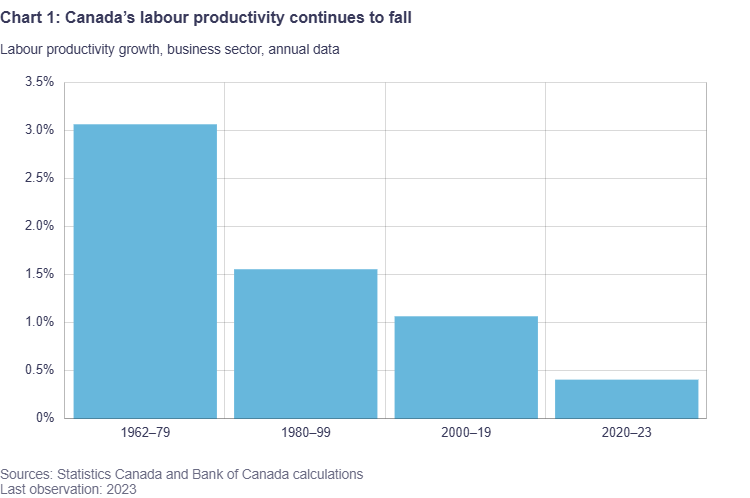
For Saint John, this means that while local businesses may be working diligently, systemic inefficiencies at a national level can hinder their growth potential. Stronger productivity directly correlates with higher wages and improved purchasing power for residents, making life more affordable. If Canada’s productivity growth since 2000 had matched other G7 nations, the national GDP would be about 9% higher today, translating to nearly $7,000 more per person.
Breaking the Vicious Cycle: Key Levers for Growth
Deputy Governor Vincent highlights that weak productivity creates a “vicious circle,” making it harder for businesses to invest, innovate, and compete internationally. He proposes three critical areas to focus on to reverse this trend and create a “virtuous circle” of growth:
1. Creating a Better Investment Climate
Canadian businesses, including those in Saint John, often face a cumbersome and complex regulatory framework that discourages investment. Streamlining approval processes, re-evaluating the scope of regulations, and reducing uncertainty can make Canada a more attractive place for businesses to grow. Additionally, improving infrastructure, such as east-west transportation routes and new port facilities, could significantly lower operational costs and broaden market access for local companies.
2. Increasing Competition in Key Sectors
Competition drives efficiency, innovation, and better pricing for consumers. However, many Canadian sectors, including telecommunications, passenger transportation, and financial services, are highly concentrated. Fostering stronger competition in these critical areas would encourage Saint John businesses to become more efficient and resilient.
3. Investing in Our Talent (Human Capital)
The knowledge and skills of our workforce are paramount. Investing in education and training, especially in transformative technologies like artificial intelligence (AI), is essential to help workers adapt and generate more value. Furthermore, making it easier to recognize professional accreditations across provinces and foreign credentials would attract and retain top talent in Saint John and across Canada.
The Bank of Canada’s Role
While the Bank of Canada cannot directly implement these changes, it plays a crucial role in fostering a stable macroeconomic environment. By keeping inflation low and predictable, the Bank creates conditions where businesses can focus on long-term planning, investment, and productivity improvements. The Bank also contributes to the national dialogue through research and speeches like this one, raising awareness about the urgent need to address Canada’s productivity challenge.
For Saint John, embracing these principles means advocating for policies that support local investment, foster healthy competition, and prioritize workforce development. By working together, the community can contribute to a stronger, more resilient, and more prosperous future.
Frequently Asked Questions
Q: What is productivity in economic terms?
A: In economics, productivity measures how efficiently inputs (like labor and capital) are used to produce goods and services. It’s about producing more or better output with the same amount of input, rather than simply working longer hours.
Q: Why is Canada’s weak productivity a concern for Saint John businesses?
A: Weak national productivity can limit wage growth, reduce overall economic resilience, and make it harder for Canadian businesses, including those in Saint John, to compete internationally. It also impacts the affordability of goods and services.
Q: What can Saint John businesses do to improve productivity?
A: While national policy changes are needed, local businesses can focus on investing in new technologies, improving operational processes, and providing training for their employees to enhance their skills and knowledge.
Q: How does the Bank of Canada contribute to improving productivity?
A: The Bank of Canada contributes by maintaining low and stable inflation, which creates a predictable economic environment conducive to business investment and long-term planning. It also raises awareness and conducts research on productivity issues.



0 Comments