
National Home Sales See a Quiet End to the Year
Canada’s housing market took a breather to close out 2025, with both home sales and prices seeing a slight dip in December. According to a new report from the Canadian Real Estate Association (CREA), this cooldown provides a new national backdrop as we head into the spring market here in Saint John. If you’re thinking about buying or selling, here’s what you need to know about the latest trends.
A Look at the National Numbers
The data from December 2025 shows a clear shift towards a more balanced market across the country. Here are the key highlights:
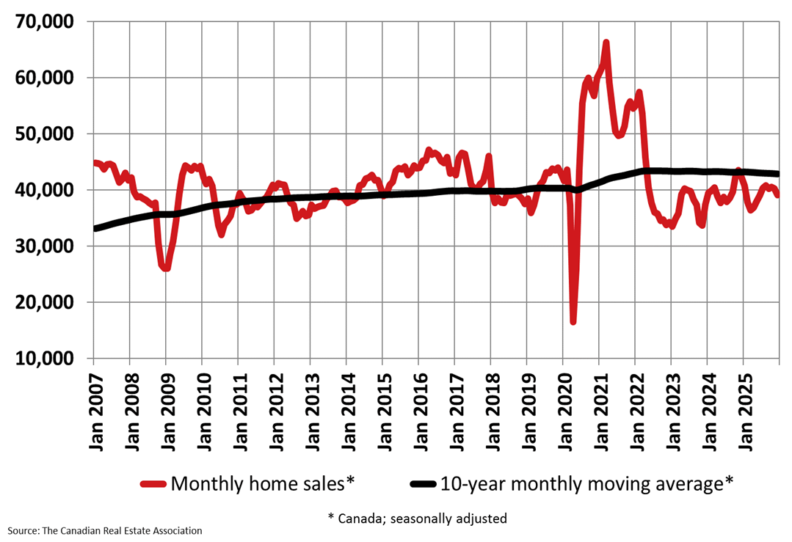
- Home Sales: National home sales fell by 2.7% from November to December.
- Annual Activity: For the full year of 2025, sales were down 1.9% compared to 2024.
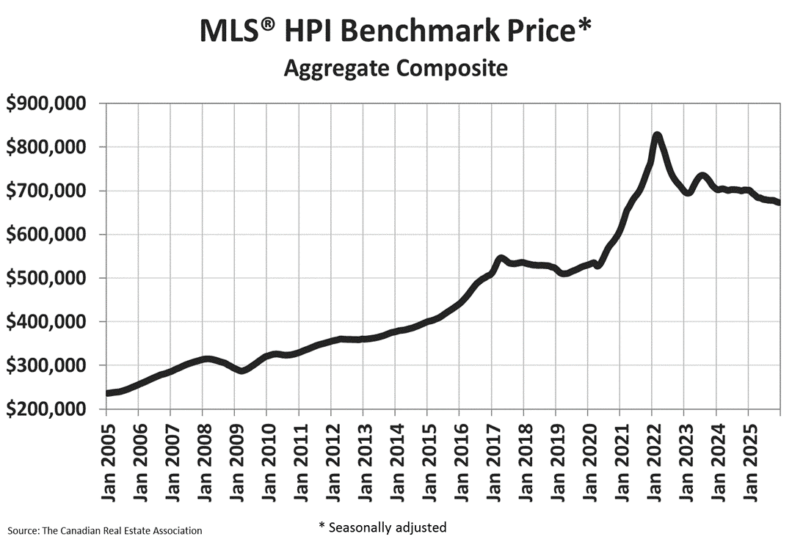
- Home Prices: The MLS® Home Price Index (HPI) dipped by 0.3% month-over-month and was down 4% compared to December 2024.
- Average Price: The national average home price was $673,335, holding steady with a minor 0.1% decrease year-over-year.
- Inventory: The country had 4.5 months of housing inventory, a level that CREA notes is consistent with a balanced market.
What the Experts Predict for 2026
While the end of the year was quiet, experts don’t expect it to last. Shaun Cathcart, CREA’s Senior Economist, suggested the December dip was a result of unrelated slowdowns in several major cities and not necessarily a sign of a long-term trend.
“We continue to expect sales to move higher again as we get closer to the spring, rejoining the upward trend that was observed throughout the spring, summer, and early fall of last year,” Cathcart stated in the report.
Valérie Paquin, CREA’s Chair, echoed this sentiment, pointing to pent-up demand from the last few years. “Barring any further major uncertainty-causing events, that means we should see a more active market this year,” she said.
The Local Perspective for Saint John
These national statistics paint a broad picture, but what does a more balanced market mean for you in Saint John? While our local market has its own unique dynamics, national trends often have a ripple effect.
For buyers, a balanced market can mean more selection and potentially more room to negotiate on price. With less competition, you may find the home-buying process less frantic than it has been in recent years.
For sellers, strategic pricing becomes crucial. A balanced market means your property needs to stand out. Working with a local real estate professional can help you understand current market conditions in your specific neighbourhood to price your home effectively.
Frequently Asked Questions
Did home prices go down across Canada in December 2025?
Yes. The national MLS® Home Price Index (HPI) fell by 0.3% from November to December and was down 4% compared to December 2024. However, the national average sale price was nearly unchanged, dropping only 0.1% year-over-year to $673,335.
Is it a buyer’s or seller’s market in Canada?
According to CREA, the national housing market is considered balanced. The sales-to-new-listings ratio and the 4.5 months of inventory both point to market conditions that do not strongly favour either buyers or sellers.
What is the outlook for the 2026 housing market?
Experts at CREA predict a more active housing market for 2026, especially as the spring season approaches. They cite four years of pent-up demand and interest rates that are expected to remain stable as key drivers.
How is market balance measured?
One key metric is ‘months of inventory,’ which measures how long it would take to sell all current listings at the current sales pace. CREA considers a range of four to six months to be a balanced market.


0 Comments