
Power bills often look like a confusing mix of numbers and codes. You open the envelope or click the email link and just look at the final total. Saint John Energy wants to change that habit. They recently released a Bill Basics guide to help you understand exactly what you pay for each month.
Ever wonder what goes into your monthly power bill? We’re stripping away the guesswork. Get a clear, simple breakdown of your charges, usage, and how to lower your costs with our Bill Basics guide.
Check it out: https://t.co/RNyUBqSmtg#learnEnergy #BillBasics pic.twitter.com/gKz2nofV3s
— Saint John Energy (@SJEnergy) July 8, 2026
Tracking Your Energy Usage
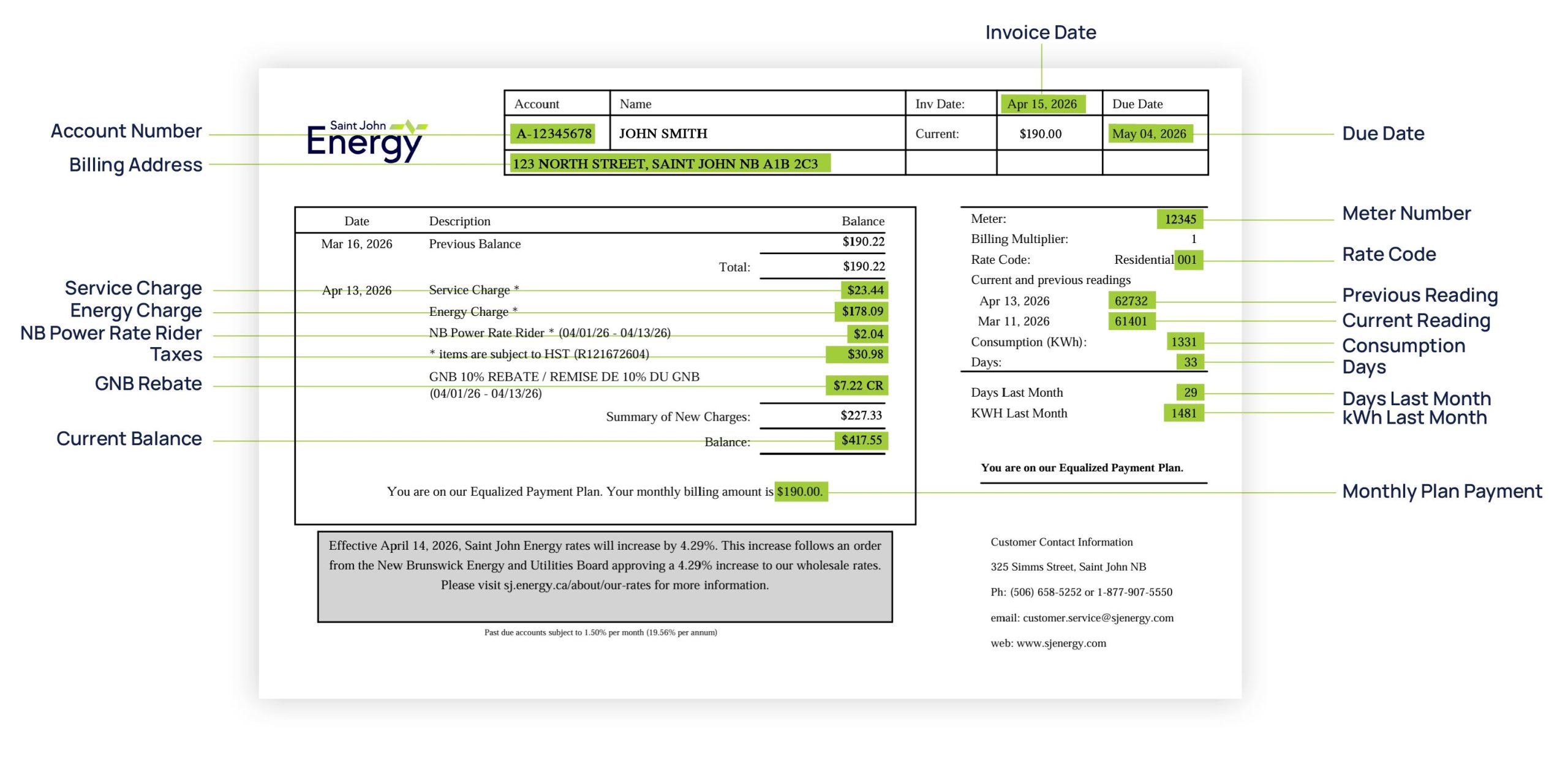
Your bill starts with a basic account summary. This includes your account number, billing address, invoice date, and due date. The next section details your energy usage. Saint John Energy measures your total usage in kilowatt hours.
You will see your current and previous meter readings. The difference between these two numbers equals your consumption for the billing period. A typical billing cycle lasts 28 to 34 days. The bill also shows your usage from the previous month so you can compare your habits.
Most residential customers have a rate code of 001. You will also see a meter number tied directly to your property. Some larger homes and commercial buildings include a multiplier. This number calculates actual electricity use when a meter cannot directly measure the full amount of power flowing into the building. Most residential customers never see a multiplier.
Understanding Your Charges
The charges section breaks down the actual costs. The energy charge covers the electricity you used. The service charge is a fixed fee. This fee covers the cost of delivering electricity safely to your home.
You will also notice the NB Power Rate Rider. Provincial regulations require this charge. It scales based on your monthly consumption. On the positive side, the bill includes a GNB Rebate. This credit applies to the tax portion of your bill and equals the provincial portion of the HST.
Equalized Billing
Customers on equalized billing see a slightly different layout. If you use this program, your bill displays your fixed monthly plan payment amount alongside your current account balance.
Frequently Asked Questions
What is the NB Power Rate Rider?
The NB Power Rate Rider is a mandatory charge required by provincial regulations. The amount you pay depends on your total monthly electricity consumption.
Why does my bill have a multiplier?
A multiplier appears when a meter cannot directly measure the full amount of power entering a building. The system measures a portion of the power and multiplies it to get the correct total. This applies primarily to large homes or commercial buildings.
How does the GNB Rebate save me money?
The GNB Rebate acts as a credit on your bill. It covers the provincial tax portion of the HST, effectively lowering the total amount of tax you pay on your electricity.
Thanks for the helpful information.