
Key US Buyer Cuts Off New Brunswick Wood Supply
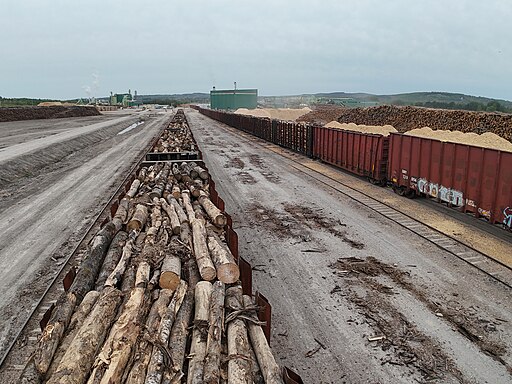
A major American pulp mill, which sourced nearly a third of its wood from New Brunswick, has stopped all softwood purchases from the province. Woodland Pulp in Baileyville, Maine, confirmed it halted imports of Canadian-sourced softwood pulpwood, sending a clear signal of the mounting pressures facing our local forestry industry.
In a statement to Global News, company spokesperson Scott Beal pointed to the financial strain caused by trade disputes. “This was driven by the increased cost of the pulp wood and, at the time, a fair amount of uncertainty about the process to comply with the tariff requirements for payment,” Beal wrote.
The decision coincides with the mill pausing its own operations and temporarily laying off 144 employees, which the company attributes primarily to a challenging global pulp market. While the market downturn is the main reason for the shutdown, the ongoing tariff battle between Canada and the United States is making a difficult situation worse.
Local Leaders Warn of Economic Fallout
The forestry industries in New Brunswick and New England are deeply connected. Kim Allen, executive director of Forest NB, described it as a “good relationship,” noting the U.S. is our largest and most logical export partner.
For now, those strong relationships are helping to absorb the shock. Premier Susan Holt explained that businesses on both sides of the border have been sharing the costs of the tariffs, but she warned this solution is not sustainable. “That won’t hold up for long,” Holt said. “Companies are managing it but the forecast for 2026 is a lot of jobs will be impacted, a lot of companies will be impacted and New Brunswick’s GDP and revenue will be measurably impacted.”
To help cushion the blow, Premier Holt has indicated that a “significant” financial relief package for the industry is coming from the federal government, though specific details have not yet been released.
A Long-Standing Dispute Creates Uncertainty
The softwood lumber dispute between Canada and the U.S. is a decades-old issue. American trade officials argue that Canada unfairly subsidizes its timber industry, giving it an advantage. The latest round of tariffs has pushed the rate on Canadian lumber to 45 percent.
Dana Doran, executive director of the Professional Logging Contractors of the Northeast, called the current situation a “perfect storm” of tariffs, market uncertainty, and reduced consumption. He emphasized that tariffs alone won’t help American suppliers unless U.S. manufacturing also increases. Without that, he warned, you risk a “negative impact all the way around.”
Frequently Asked Questions
- Why did the Maine mill stop buying New Brunswick wood?
- The company cited the increased cost and uncertainty caused by U.S. tariffs on Canadian softwood. This is compounded by a weak global pulp market, which has forced the mill to temporarily pause its own operations.
- How important was this mill to New Brunswick suppliers?
- Woodland Pulp sourced approximately 30 percent of its wood fibre from New Brunswick, making it a significant buyer for the province’s forestry sector.
- Are New Brunswick jobs at risk?
- Yes. Premier Susan Holt has warned that without a resolution, many jobs, companies, and the provincial GDP will be measurably impacted by 2026.
- Is the government providing any help?
- The federal government is reportedly preparing a significant financial relief package for the industry, but the details have not been announced.



0 Comments