
If you live in Saint John, you have likely noticed the increased activity at the waterfront. The Port of Saint John is experiencing a large increase in cargo. Ontario manufacturers are reshaping their supply chains and sending their goods right to our city. According to a recent report from the Financial Post, cargo traffic from Ontario to Saint John increased 153 percent over the past year.
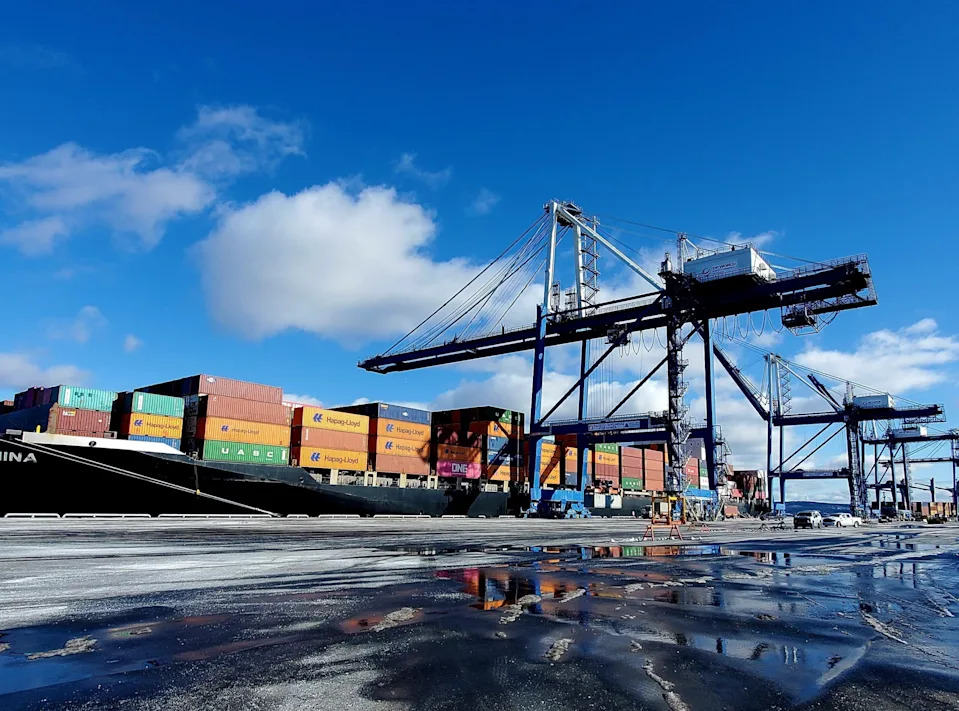
Shipments from Ontario now make up nearly a third of the port total exports. In 2025 alone, 8,083 container units left Saint John. That is more than double the previous year. About half of these containers headed to Europe, carrying billions of dollars worth of automobiles, metals, and forestry products.
Escaping United States Tariffs
Exporters want to avoid United States tariffs. When goods leave Canada directly through Saint John to international destinations, companies bypass these American fees. Global shipping delays also play a role. Disruptions in the Suez Canal and conflicts in the Middle East force vessels onto longer routes. Saint John offers a faster and more reliable eastern gateway.
Port of Saint John chief executive Craig Bell Estabrooks notes the impact of this shift. “It does not take much moving from north to south over to east to west to be a massive change for the supply chain,” he says. He adds that while tariffs push some shippers east, many are simply discovering the reliability of our local gateway.
The Dual Railway Advantage
Saint John holds a unique advantage over other eastern ports. We have two major railway options. Both Canadian Pacific Kansas City and Canadian National Railway serve the port. Halifax only relies on Canadian National Railway.
Barry Prentice is a supply chain management professor at the University of Manitoba. He points out that this railway competition directly benefits shippers. “The competition of the two rail alternatives can only benefit Ontario shippers,” Prentice says. Saint John is also closer to Ontario by rail than Halifax and handles much larger container ships than Montreal.
Modernization Pays Off
This growth stems from a decade of modernization. The port secured a 205 million dollar initial investment and a 42 million dollar follow up to deepen the main channel and quadruple container capacity. DP World PLC took over as the container terminal operator in 2017. They brought massive cranes and stronger ties to global shipping lines. Today, the port handles roughly 240,000 container units, doubling its traffic over the past three years.
Improving Simms Corner Traffic
Rapid expansion creates new challenges. Simms Corner remains a major bottleneck where rail lines, trucks, and pedestrians meet. The port wants to fix this issue. Officials are seeking funding from the federal Trade Diversification Corridors Fund. They are working with local partners to separate rail and truck traffic. This upgrade will help the port reach its goal of handling one million container units.
Frequently Asked Questions
Why are Ontario shippers using the Port of Saint John?
Shippers want to avoid United States tariffs and bypass global shipping delays. Saint John offers a direct and reliable route to Europe and other international markets.
How much has cargo traffic increased?
Cargo traffic from Ontario to Saint John increased by 153 percent over the past year.
What railways serve the Port of Saint John?
Both Canadian National Railway and Canadian Pacific Kansas City serve the port.
What is the port doing about traffic congestion at Simms Corner?
The port is seeking federal funding to separate rail and truck traffic at Simms Corner. This project improves traffic flow and expands port capacity.


Excellent article! Great news
A very informative article! Thank you for the update.